

Credits
16
Prerequisites
None
Courses taught in
English
Dates
Jan 25 – May 9
Program Countries
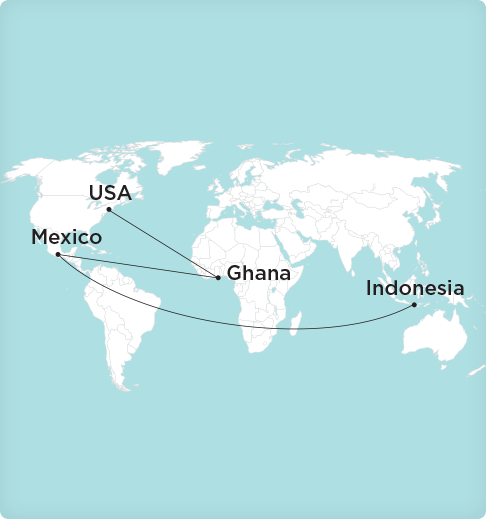
Ghana, Indonesia, Mexico
Program Base
USA, Ghana, Mexico, Indonesia
Visa
Required
Critical Global Issue of Study
Identity & Human Resilience



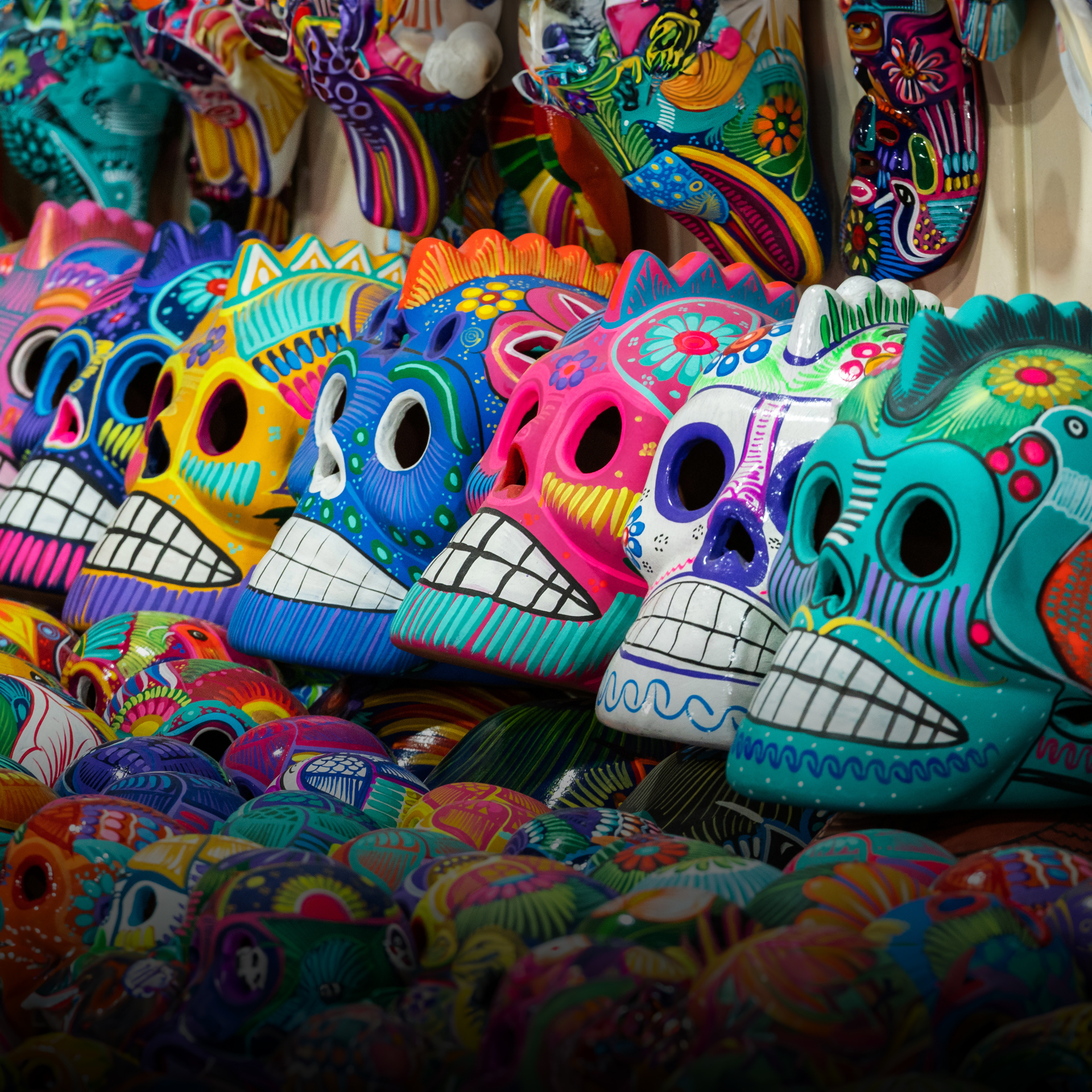
Through a life-affirming exploration of the meanings of death, examine how this “taboo” topic inspires artistic expression and social movements and reinforces cultural identities.

16
None
English
Jan 25 – May 9
Ghana, Indonesia, Mexico
USA, Ghana, Mexico, Indonesia
Required
Identity & Human Resilience
Death trespasses any attempt to separate it from our lives. In American public culture, people use metaphors to avoid talking about death, but it does not respect the same boundaries and confronts everyone without pause. The contradiction between this social taboo and its ever-presence leaves many Americans death illiterate, with limited functional knowledge of the process of death and dying, the psychology of bereavement and continuing bonds, end-of-life planning, or the role of aging and elders in a society. Our heightened death avoidance also stilts our ability to have sensitive conversations, as well as engage each other past the boundaries of culture. Death is not only the grim and the grisly (though it can be that too). Death can also be a love story, a community story, a social and economic contestation, or a call to action. Studying death brings into view these wider aspects of the social experience. Travel to New York City and three countries where death is granted a social place: Ghana, Mexico, and Indonesia. Here, you will learn cultural practices, social policies, and creative communities confront and celebrate death.
Start in New York City where you will meet deathcare workers, dark tourism operators, community organizers, and spiritual leaders to understand death and dying on a neighborhood and national scale. In Ghana, expand the emotionality of death as you encounter how death may be viewed as a celebration of life, and learn how healthy deathways can help to address historical traumas. Your next stop is Mexico where you will witness the intermingling of Indigenous beliefs and Catholicism contribute to contemporary attitudes, rituals, and practices and how grassroots organizers advocate for people preparing to die. Lastly, in Indonesia, encounter a microcosm of world death cultures where the line between life and death grays through traditional forensic engagements with the decomposition of the body. Throughout the course, learn how death is managed within and beyond the clinic, how communities care for each other during times of death, and how to strengthen cultural competency and travel ethics as you have conversations over the more intimate–and exceptional–realm of people’s lives.
Introduce yourself to death studies and explore death and dying around the world. Comparative death studies may support your goals in anthropology, sociology, public health, mortuary science, philosophy, psychology, medical humanities, and more.
None
Students studying on this SIT semester-length program can choose to simultaneously complete a minor, with no additional coursework or cost. At SIT, a minor is a minimum of 16 credits taken within a content area. This standout credential can help boost your future job or graduate school applications.
The global studies minor examines the interconnectedness of people, places, and systems across the world, exploring global issues through cultural, sociological, and historical lenses. The medical humanities minor explores the human experience through interdisciplinary study in literature, history, culture, philosophy, and the arts.
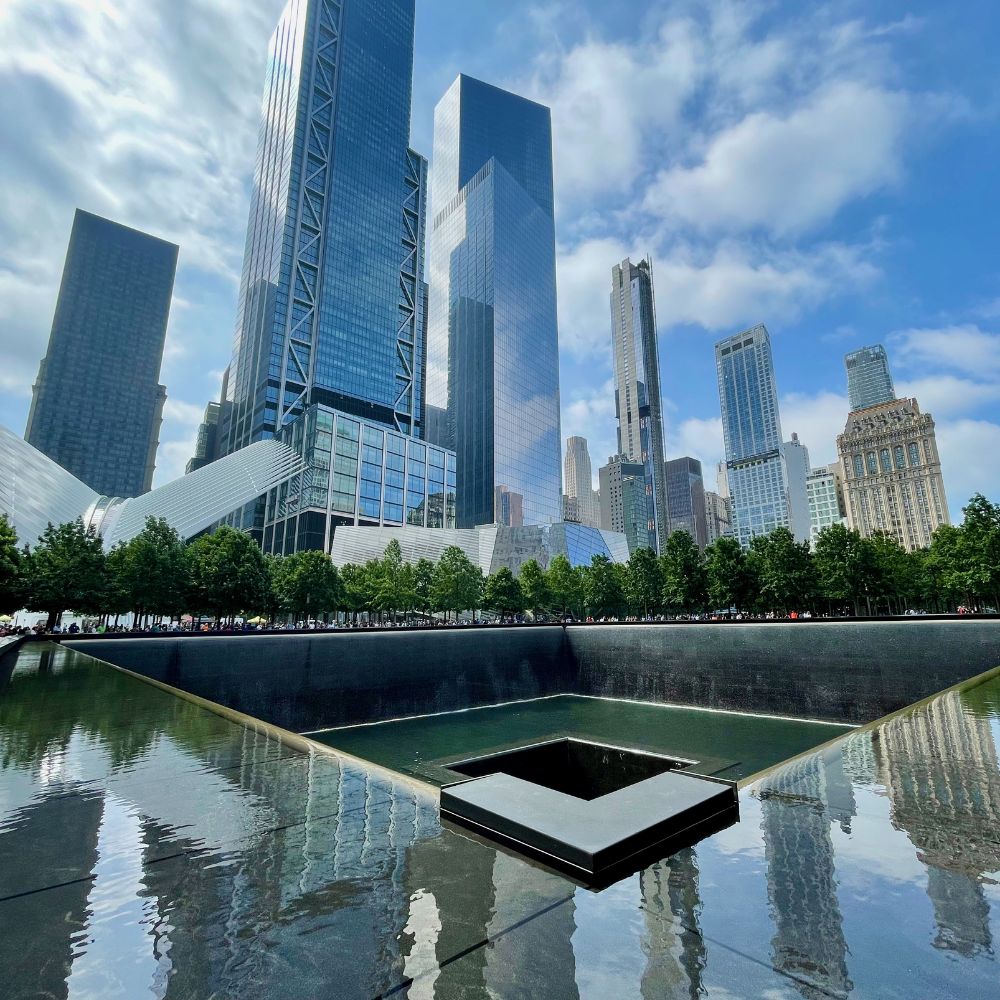



As time capsule showcasing the changing nature of death avoidance in the US, New York City has stories to tell about dying on a neighborhood and national scale. You will visit the mausoleums of Gilded Age families, see the changing symbolism of headstones through time, learn how death is staged in art and theater, and set a class mission to revalue the historically quieted deaths. Meet with deathcare workers, aging advocates, dark tourism operators, artists, and spiritual leaders to learn what it means to die in the city that never sleeps.
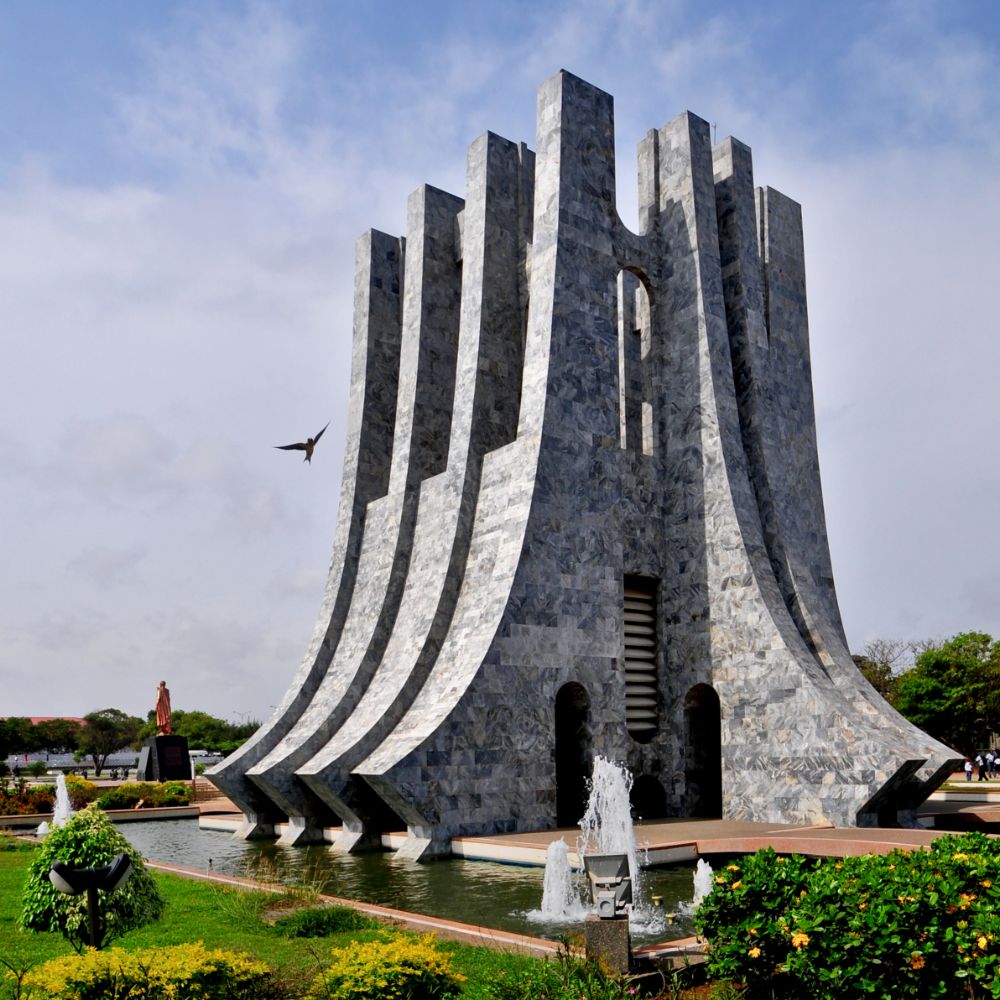
“You have done it beautifully,” they will say in Kumasi when you learn to wear the black and red funeral dress, dance with the mourners, and add to the Asante crowds that honor the dead. Death in multiethnic Ghana is a site of transformation and cross-cultural understanding. Between the funeral posters, decorative fantasy coffins that realize the dreams of the Gaa departed, dancing pallbearers, week-long feasts, and still-present ancestors, Ghana is a world-teacher in what modern death engagements can look like. It is, however, also a site of historical violence with traumas that continue to impact both Ghana and the U.S. Journey to Elmina Castle and the Cape Coast, major centers for the transatlantic slave trade, and contemplate how social movements turn mourning into activism and dead into honored ancestors.
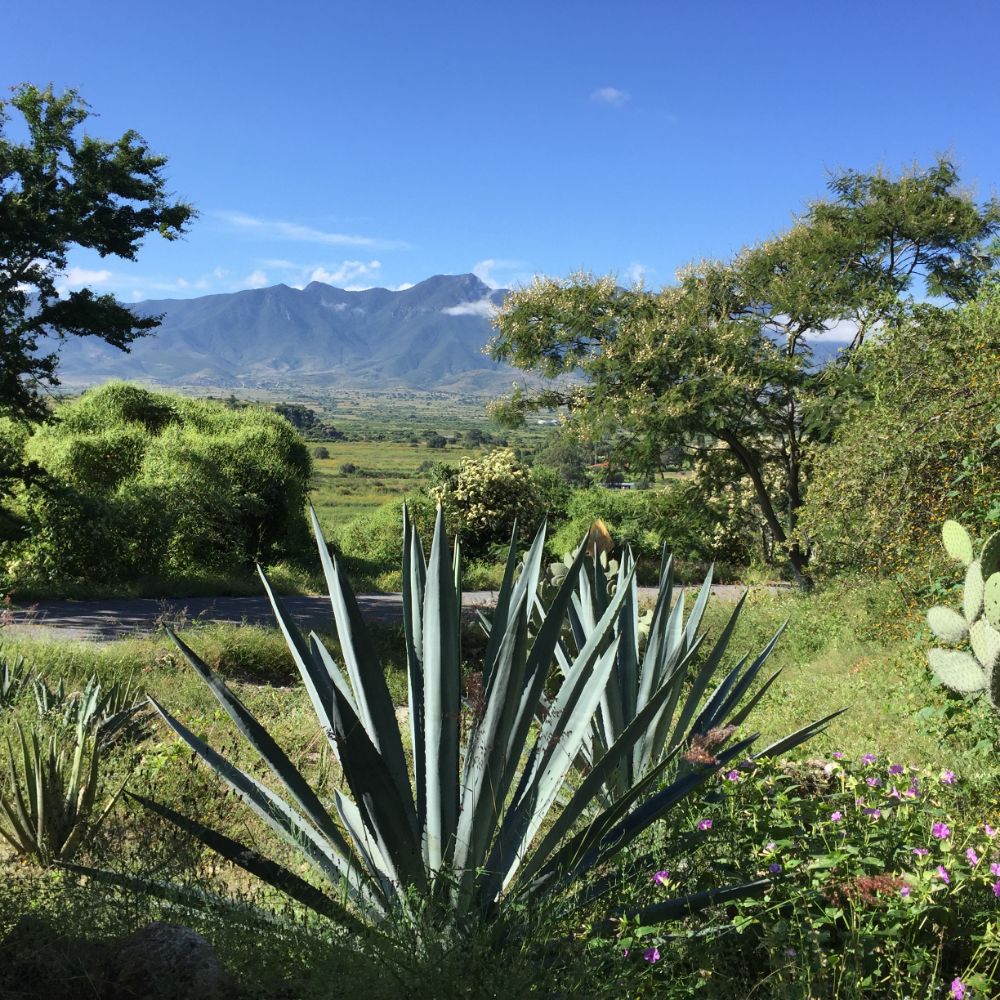
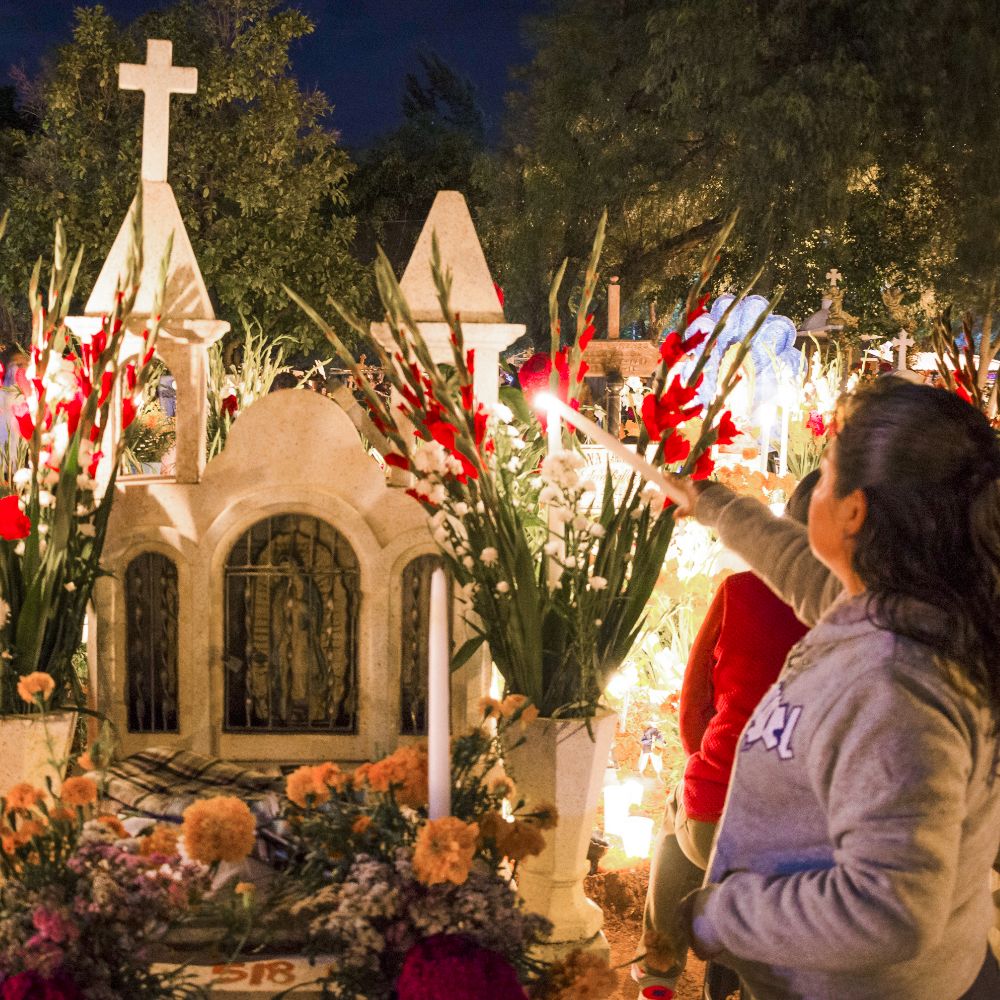
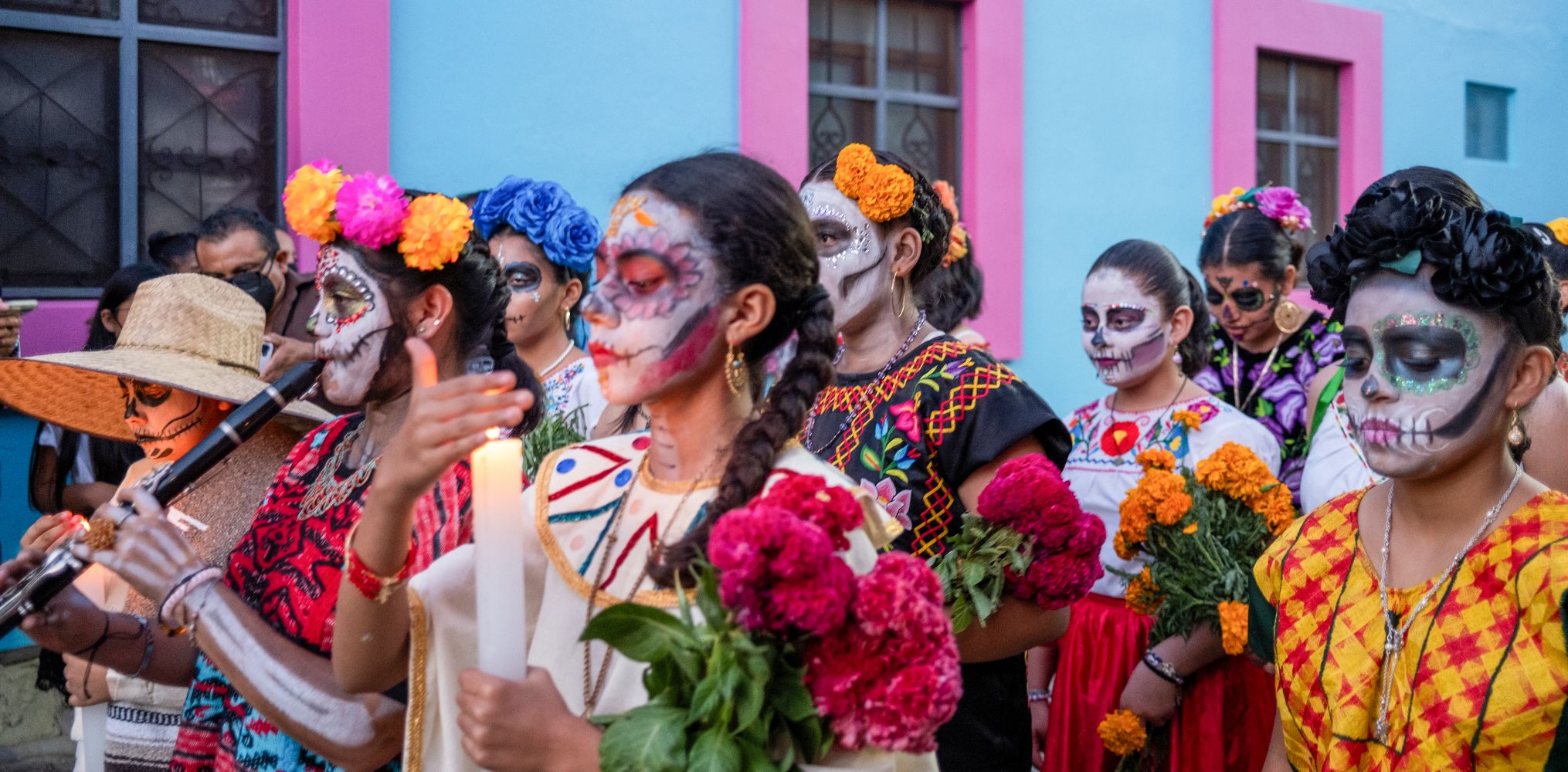
Mexico’s vibrant death cultures are inseparable from national identity. Mexico is death as perhaps its most affirmative, where it is not solely grim but abstracted throughout the living culture with flare. Yet the historic roots of these death cultures came to persevere through the oncoming of new economic, exploitative, and religious world orders. Go beyond vibrant death to see how the syncretism of Indigenous beliefs and Catholicism results in contemporary attitudes, rituals, foods, arts, and practices. Explore Monte Albán, San José Mogote, and Mitla as history-crystalizing cities of the dead. Spring students also travel to Mexico City to explore a wider array of archaeological death cultures, such as in the symbols of reincarnated soldiers encased in Teotihuacan during the butterfly wars. At the same time, we will unpack how domestic and foreign policy perpetuates systems that devalue human life to create differential deaths. And just as death pervades the culture, so too does resistance, as you will encounter in contrasting epistemologies, science traditions, and autonomous communities that see a healthy deathway as an outcome of good community governance.
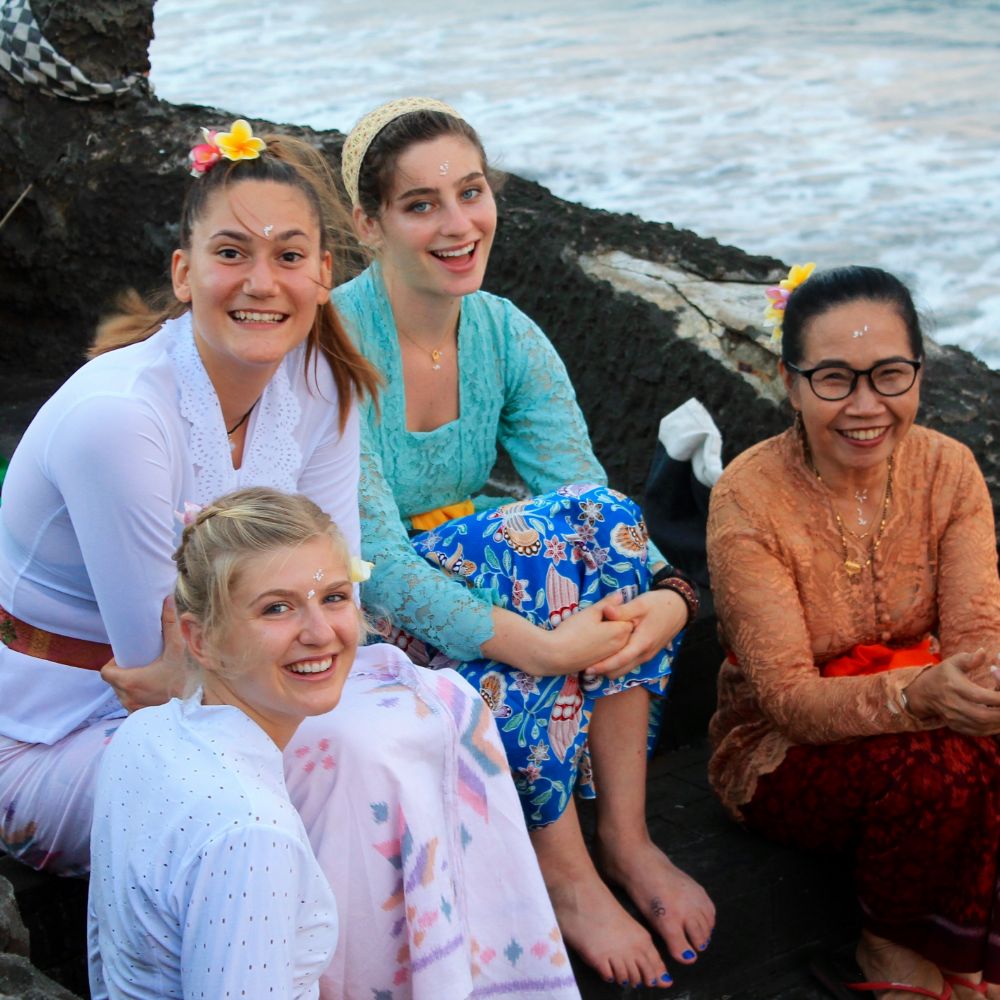
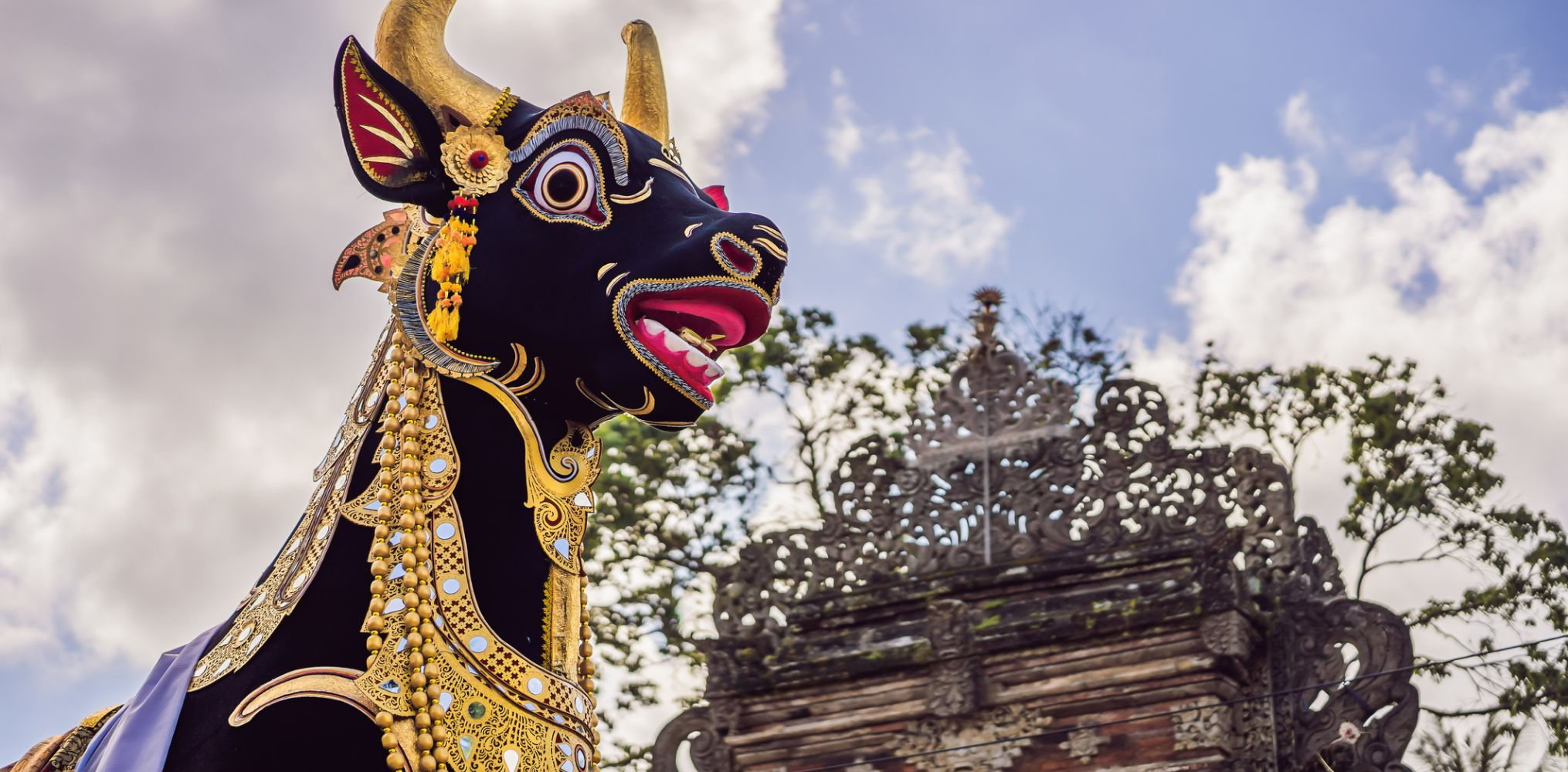
Bali is only a foray into the hundreds of death cultures of Indonesia. As the place of our earliest accounts of diverse deathways that challenge once-argued “objectivity” of death’s dividing lines, Indonesia demonstrates how ways of death are inseparable from a community’s way of life. From Balinese cremation ceremonies, to bejeweled crania from Borneo, to Torajan traditions of living deads, infant absorbing trees, and animal sacrifices–death sheds its exoticism when contextualized in community philosophies, inequalities, ways of mourning, social duty, and meanings that once existed and are no longer known but kept alive in the memory archive of death practice. In many cases, the line separating life and death is permeable, and the dead body may be manipulated and processed to enact this reality. Bali, however, is also a great site of indigeneity-making, where wellness tourists, influencers, the luxurious, and adventure backpackers arrive to questions “whose agency” and “whose wellness” actually matter.
Please note that SIT will make every effort to maintain its programs as described. To respond to emergent situations, however, SIT may have to change or cancel programs.
Upon completion of the program, students will be able to:
The following syllabi are representative of this program. Because courses develop and change over time to take advantage of dynamic learning opportunities, actual course content will vary from term to term.
The syllabi can be useful for students, faculty, and study abroad offices in assessing credit transfer. Read more about credit transfer.


Dying to Know: Interdisciplinary Seminar on Death – syllabus
(IDST3500 / 4 credits)
This core interdisciplinary seminar takes the conversations of critical death studies and expands them across the globe. Students will learn about cross-cultural death rites, the rise of the death avoidant attitudes, the operations—and exploitations—of deathcare industries across cultural contexts, the forensic and social post-mortem processing of the dead body, elderhood, and the complex emotionality of death. Students will trace out deathways in each location to explore the many routes dead bodies and their mourners may take. Students will also engage with diverse texts, media, and art that reflect, shape, and challenge attitudes toward death and dying. Through these multipronged lines of inquiry, this course will equip students with the functional knowledge and skills to integrate end-of-life planning into their life and career plans.
Cross-cultural Perspectives on Death, Dying, and Bereavement – syllabus
(ANTH3000 / 4 credits)
Although death is universal, there is no universal experience of death and dying. Dissatisfaction with deathways at home has led many to imagine othered, better deaths elsewhere. This course demystifies “the elsewhere.” This course explores death, dying, and bereavement from the perspective of comparative cultural anthropology with an emphasis on beliefs, ontologies, funerary rites, and post-mortem practices. The course will broadly survey different regional and cultural contexts accompanied by in–depth discussion of the attitudes, symbols, practices, and positionalities of participants. Through the process of learning anthropological perspectives in the context of death practices, the course will challenge imagined indigeneities and clarify how explorations of the unfamiliar may operate as a reflexive tool to show that a person’s own culture or worldview is one among many, rather than a norm through which difference is understood.
Sociology of Death: Deaths that Count and Lives that Matter – syllabus
(SOCI3000 / 4 credits)
Death comes to us all—but not equally. This course examines necropolitics, or the social and political structures that dictate who becomes “fit to die.” These valuations of life are often captured in stark differences in mortality and morbidity rates across populations. Often, such deaths may appear natural. In reality, they tell us more about the power structures that affirm or deny people’s humanity, and segregate people’s lifeways so that some may die slowly, less theatrically, and away from view. Deep dives into global, national, and local mortality/morbidity rates will expose the presence of structural violence that leads to slow death. While these data often highlight problems, they do not always tell us about the why, how, or what next, which are instead rendered visible through a more qualitative lens favored in experiential learning. In this course, students will look deeper into how categories of “subaltern” come to be, how political deaths are naturalized, how deathways diverge by inequalities, and how death drives social movements as we seek to revalue lives lost to quiet violence. On site visits, students will engage with sites of active social memory and activists advocating for social change. Students will also examine how structures of valuation of human life are tied to political and scientific histories, and explore other trajectories in Indigenous science and technologies studies that lead to differing valuations of life.
Project Death: Community Engagement and Ethical Inquiry – syllabus
(ISIH3000 / 4 credits)
This course incorporates two modalities of project-based learning—community action and self-directed inquiry—to enhance students’ understanding of death and dying. Project Death is an uncommon opportunity for students to curate their own engagement with death through research, partnership, and creative or academic outputs. At each location, students will have opportunities to engage with local organizations and contribute to relevant community-initiated projects. Through their participation and guidance from host communities and partners, students will gain experience in respectful collaboration and intercultural communication as they gain insights into how local communities care for their dead, dying, and bereaved. Students will further apply what they have learned about ethical and appropriate engagement with host communities to their inquiry-based projects wherein they explore divergent responses to their research questions. Through these forms of project-based learning, students will develop a holistic and informed perspective on death and dying.


Student accommodations will include a mix of homestays, hostels, guesthouses, and small hotels/dorms. Students will experience homestays and will be oriented as they move from place to place.


SIT Study Abroad is committed to ensuring that international education is within reach for all students. We believe in the transformative power of immersive, intercultural experiences and are dedicated to supporting students in their educational journey.
See All Costs

Students are required to obtain a visa for this program. Your admissions officer will provide you further guidance on the process and support documents. Please do not apply without instructions from your admissions officer.
Hear from SIT’s Academic Dean of Assessment and Learning Support, Dr. Kathryn Inskeep, who was instrumental in creating IHP Death & Dying, to learn more about the purpose of the program and who should participate.