PLEASE READ THE FOLLOWING INFORMATION ON COURSE PATHWAYS
- ALL students will enroll in the following courses:
- Intersectionality in African Contexts
- French in Cameroonian Contexts (based on an in-country evaluation of French proficiency, students will be placed at the appropriate level; see course description for levels)
- 3-credit Course at Catholic University of Central Africa
- Students choose EITHER Social Science Methods and Ethics in Global Contexts or Global Organizational Culture and Ethics.
- Students choose EITHER Internship and Seminar or Independent Study Project.
Intersectionality in African Contexts
Intersectionality in African Contexts – syllabus
(SOCI3000 / 3 credits)
This course will encourage students to analyze how Cameroon’s colonial legacy (shaped by both French and English influences) affects contemporary social structures, exploring the intersections of ethnicity, age, religion, physical ability, gender, race, class, and sexuality in this complex African context. With over 250 local languages and strong patriarchal norms, special attention will be paid to women’s experiences across different social contexts, from urban centers to rural communities. The course critically examines how various forms of marginalization and privilege intersect, particularly in relation to family law, gender roles, religious freedom, LGBTQ+ rights, and disability access.
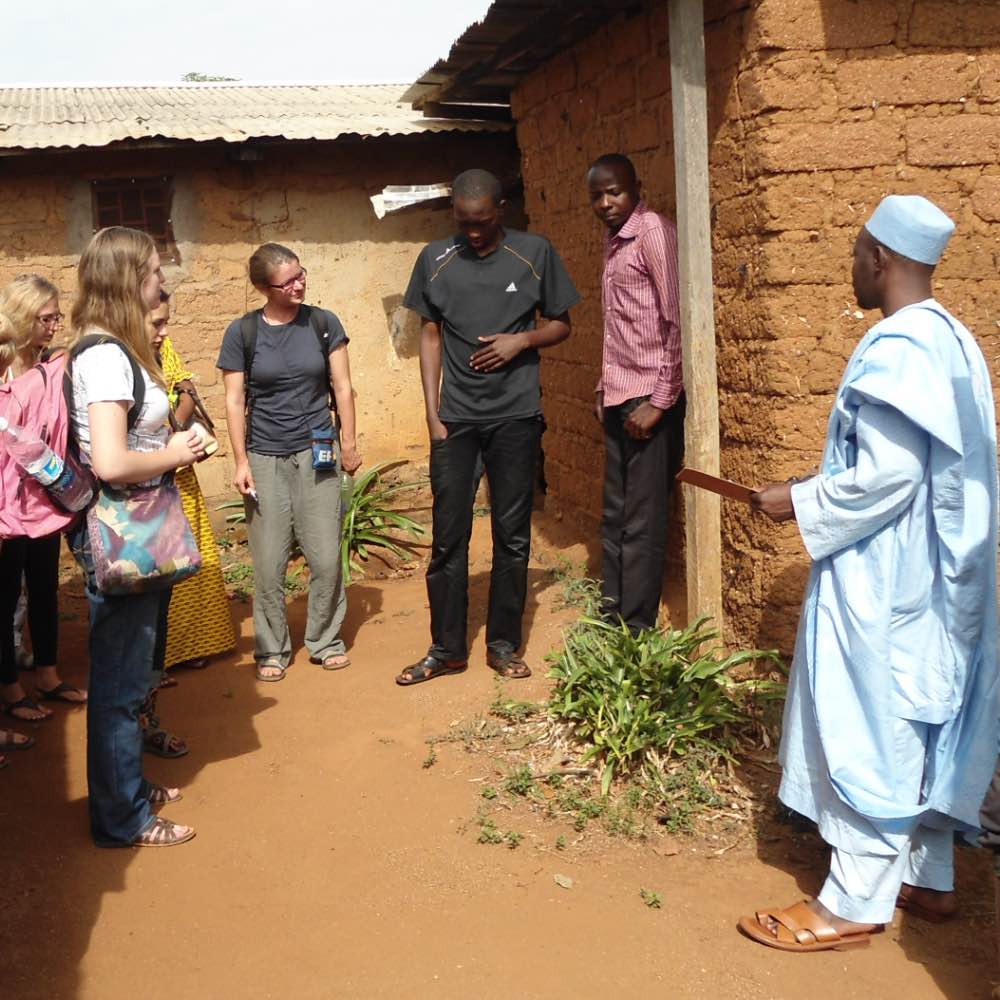
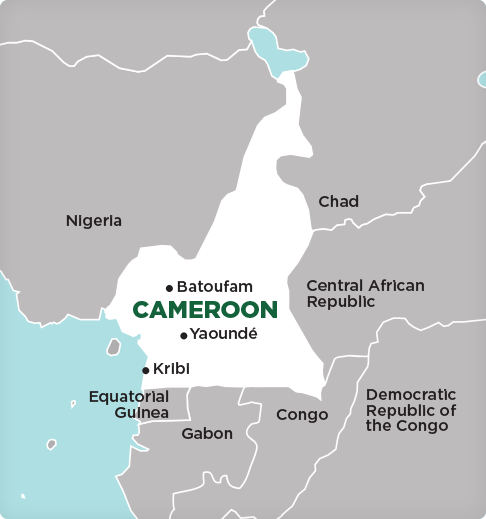
The course combines theoretical frameworks with practical field experiences, including excursions to Batoufam and Northern Cameroon. Through thematic seminars on women, sexuality, ethnicity, religious diversity, disability, and culture, students will gain insights into the dominant and varied within-group differences in identities and societal dynamics, exploring how intersectional understanding can translate into meaningful social change.
Social Science Methods and Ethics in Global Contexts or Global Organizational Culture and Ethics
Social Science Methods and Ethics in Global Contexts – syllabus
(RSCH3500 / 3 credits)
This course is designed to introduce you to the methodological tools used by social scientists to conduct empirically grounded, theoretically engaged research. The course will cover the basic elements of research design, the role of theory in empirical research, and the ethics for social scientific research, with particular attention to the complex ethical considerations that arise when conducting research in international and cross-cultural contexts. Students will gain hands-on experience with both basic quantitative and qualitative methods, with the flexibility to emphasize their preferred methodological approach in their final work. Using this project-based approach, the course will prepare you to design and execute social science research projects while developing competency across methodological traditions.
OR
Global Organizational Culture and Ethics – syllabus (GOCE3500/3 credits)
This course equips students to engage meaningfully and ethically in internship experiences across diverse sociopolitical, cultural, environmental, and global contexts. Using a critical, practice-based approach, students examine the nature and purpose of internships as transformative experiential learning opportunities that connect to the program’s Critical Global Issue theme. Emphasis is placed on navigating workplace and organizational cultures, reflecting on identity and positionality in professional settings, and applying ethical principles to working globally with communities, individuals, and environments—particularly in collaboration with vulnerable populations and in sensitive ecological or habitat settings.
French in Cameroonian Contexts
Intermediate French in Cameroonian Contexts – syllabus
(FREN2003-2503 / 3 credits)
Advanced French in Cameroonian Contexts – syllabus
(FREN3003-3503 / 3 credits)
French Literature in Cameroonian Contexts – syllabus
(FREN4003-4503 / 3 credits)
Taught in French for students who have completed two semesters of French. This language course focuses on the acquisition of the French lexicon used in the areas of development and social change to equip students with the language tools needed to work with NGOs and local and international development associations. Students are immersed in course materials designed to build their capacity in comprehension, speaking, reading, and writing skills to support the course’s focus on engaging students with discourses, vocabularies, discussions, and readings centered on development issues in Cameroon. Based on in-country evaluation, including oral proficiency testing, students are placed in the appropriate level, with additional language practice in homestays and on field visits.
3-credit Course at Catholic University of Central Africa
Coming soon
Students will enroll in one of the following courses: Internship and Seminar or Independent Study Project.
Internship and Seminar
Internship and Seminar – syllabus
(ITRN3000 / 4 credits)
International development became firmly established as a field of study and practice with an extensive apparatus that spans international borders, driven by an agenda of closing the global wealth gap at the onset of decolonization. Compared to most countries in the region, Cameroon has, since independence, had relative political stability, which has permitted investments in agriculture, transport infrastructure, petroleum, and timber. In this sense Cameroon provides an excellent setting in which to study mainstream development at play and the transitions that occur as society gets increasingly integrated into modern lifestyles. This internship experience is intended to place students in organizations at the center of this transition, as a way to enable them to appreciate the drivers and goals of mainstream development practice and how they have been structured. Internship and coursework will be completed in French.
Sample internships:
- Assisting efforts to end hunger, poverty, and socioeconomic injustice; protect the environment; and support Indigenous rights at RELUFA, a nonpartisan national network of secular nonprofit organizations and mainstream churches from all regions of Cameroon
- Interning with Cameroonian feminist NGO Sourires de Femmes (SDF), run by young women and girls fighting to protect and promote the rights of vulnerable women and girls in Cameroon. Their work mainly centers around two issues: gender-based violence (GBV) and sexual/reproductive health.
- Working with Women’s Promotion and Assistance Association to eradicate illiteracy, prostitution, child abuse, poverty, and human trafficking
- Advocating for farmers and other Cameroonians at Citizens Association for the Defense of Collective Interests, a well-known and respected organization that works to change unfair laws and corruption across all of Cameroon
- Working with Association des Acteurs de Développement (ADEV) a platform for training, investigation, consultation, and expression, leading to concrete actions in favor of sustainable development for social change. ADEV’s mission can be succinctly summarized by the phrase, “Stop talking, start acting,” reflecting ADEV’s mission to raise awareness and increase the capacity of youth and women to engage in public and political life.
- Assisting in projects such as agricultural investment, women’s entrepreneurial classes, and a girls’ soccer program at Breaking Ground, an organization founded by a former SIT student and her classmates on the principle that a community project can only effectively address the needs of a population if it is conceived, planned, and implemented by the community for whom it is intended
- Learn about the ongoing Central African refugee crisis in Cameroon’s Eastern Region while interning with Respect, which stands for Refugee Education Sponsorship Programme Enhancing the Community
Together, which focuses on increasing higher education opportunities for refugees.
OR
Independent Study Project
Independent Study Project – syllabus
(ISPR3000 / 4 credits)
Conducted in Yaoundé or in another approved location appropriate to the project in Cameroon. Sample ISP topics: political opinions among Cameroonian youth; Chinese and American development efforts and perceptions in Cameroon; gender roles and standards of beauty in Cameroon; traditional and modern healing: people’s preferences; usages and practices of bilingualism in Cameroonian schools; influences of Westernization on the Bikutsi style of music; oral history of the Bamiléké people; land grabbing and its local impacts; microfinance and women’s empowerment. Coursework and final project completed will be in French.
Sample ISP topics:
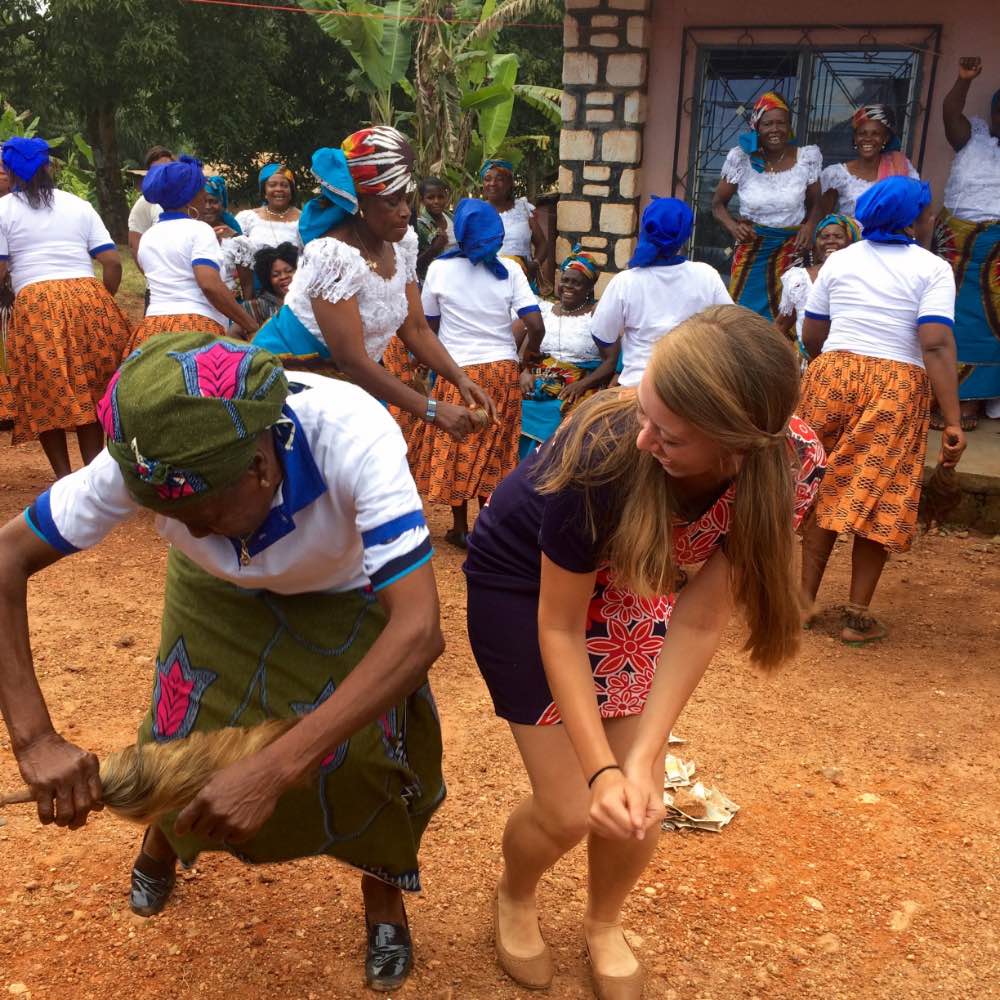
- Representation and challenge of women’s roles through traditional dance
- Impact of gendered microfinance on domestic violence
- Efforts and obstacles toward political change in contemporary Cameroon
- Cultivating rice in import-dependent Cameroon
- Political opinion among Cameroonian youth
- Chinese and American development efforts and perceptions in Cameroon
- Gender roles and standards of beauty in Cameroon
- Traditional and modern healing: people’s preferences
- The uses and practices of bilingualism in Cameroonian schools
- The influences of westernization on the Bikutsi style of music
- Oral history of the Bamiléké people
- Land grabbing and its local impacts
- Microfinance and women’s empowerment
Browse this program’s Independent Study Projects / undergraduate research.