

Credits
16
Prerequisites
None
Courses taught in
English
Dates
Jan 29 – May 13
Program Countries
Australia
Program Base
Byron Bay
Visa
Required
Critical Global Issue of Study
Climate & Environment
Development & Inequality



Surrounded by the inspiring beauty of Australia’s World Heritage areas, investigate sustainable ways of protecting the environment that also promote equity and wellbeing.

16
None
English
Jan 29 – May 13
Australia
Byron Bay
Required
Climate & Environment
Development & Inequality
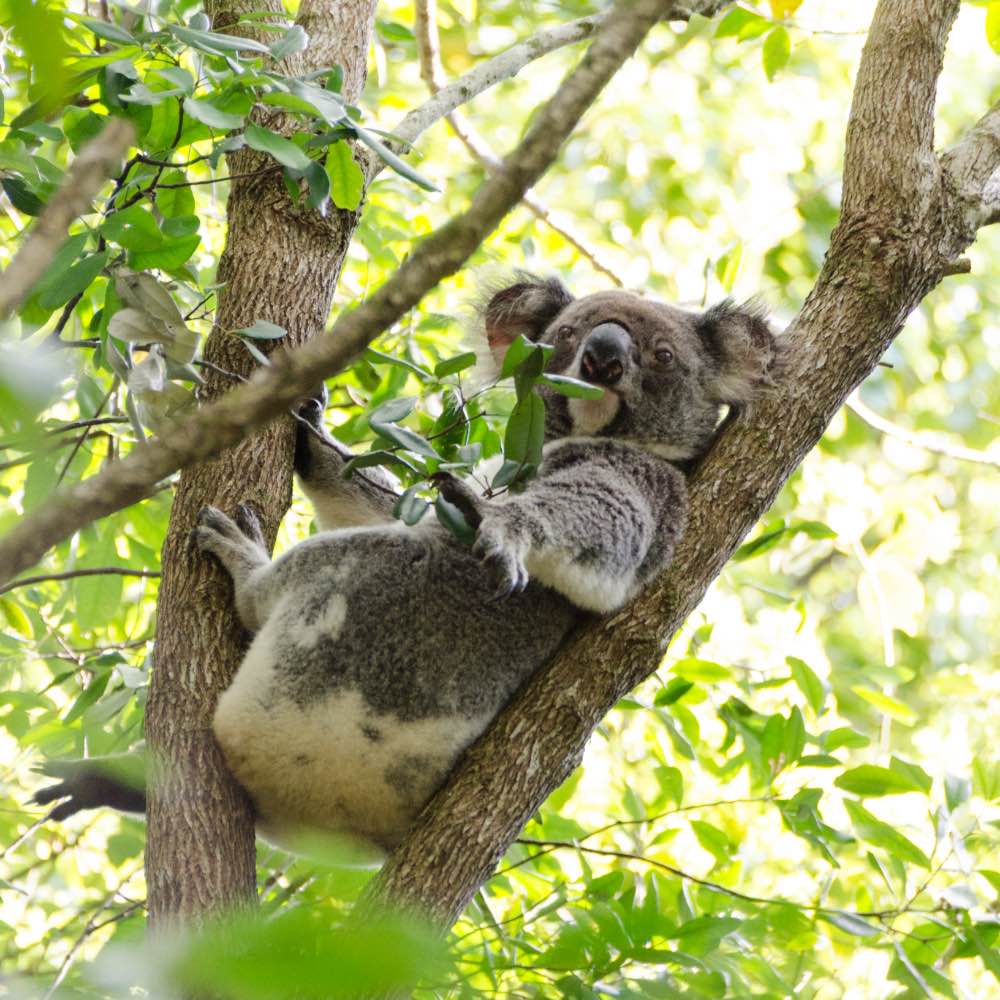
Australia has stunning and diverse natural environments, from flourishing rainforests to vast deserts and mountain ranges full of unique plants and wildlife. All of this is at risk from changing climates and the destruction of ecosystems, requiring increased environmental action at the personal, social, and political levels.
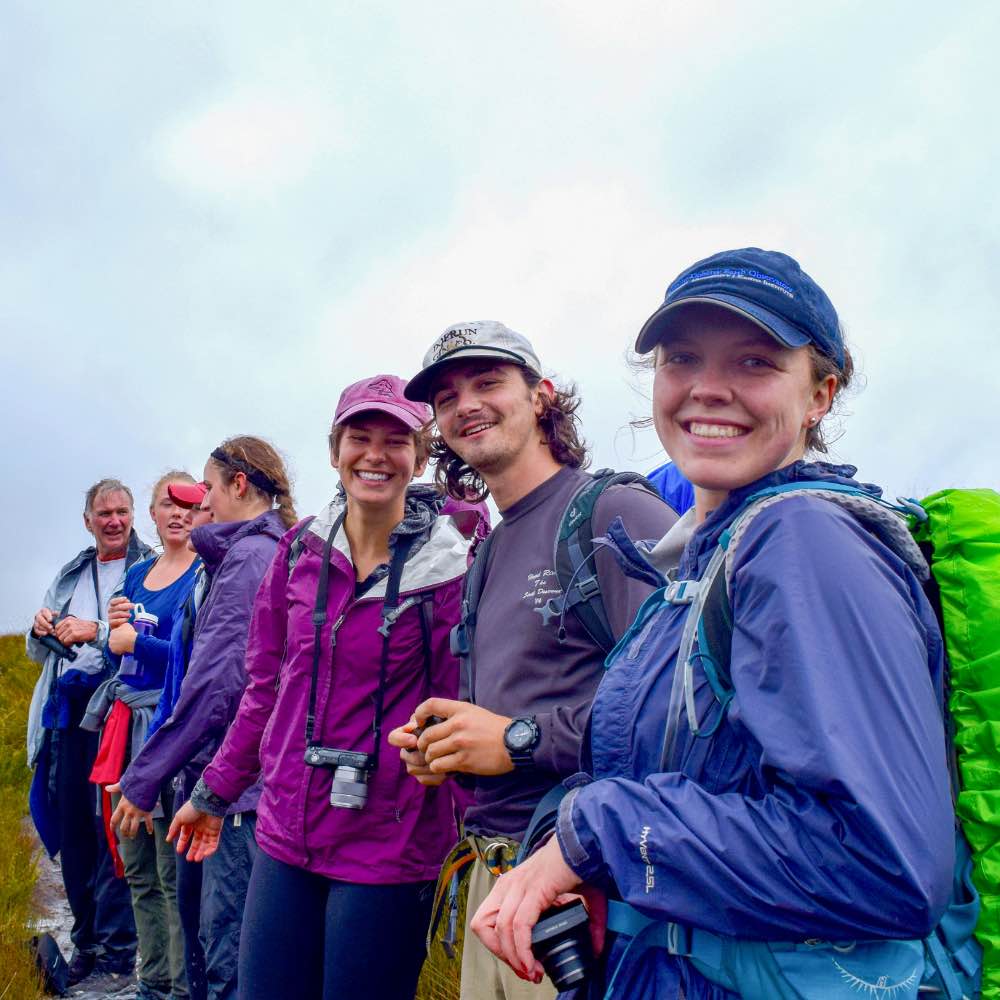
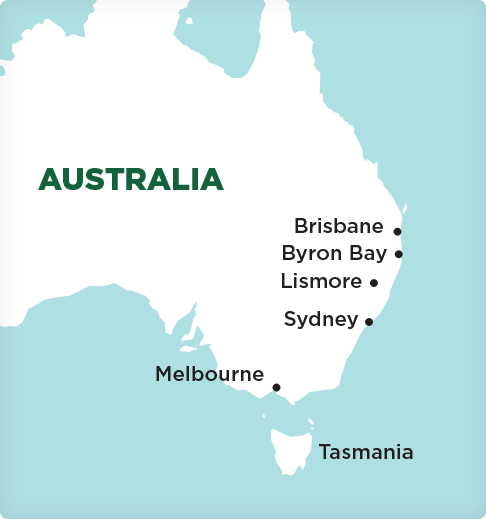
From your base two blocks from the beach in the small coastal town of Byron Bay, you’ll explore Australia’s burgeoning permaculture and sustainable farming initiatives. You will take workshops and excursions, including 10 days in Tasmania and a four-day camping trip with Aboriginal elders. In Melbourne, take part in field trips and lectures on sustainable energy and housing. Throughout the semester, you’ll learn from environmental advocates and academics, see examples of successful environmental campaigns, and obtain tools to apply sustainability efforts at home.
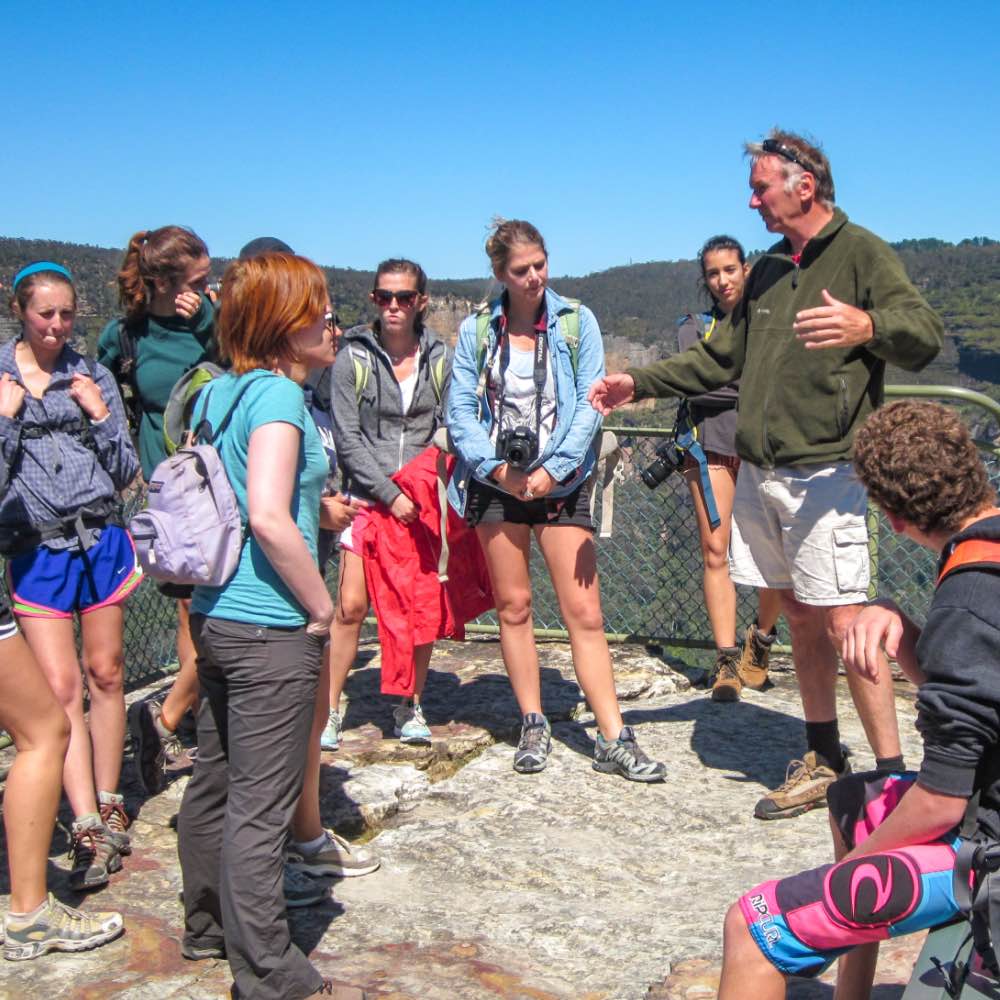
You will spend much of the program in the field. In each destination, you will learn about climate, geology, soils, and flora and fauna, as well as the area’s human history and culture, in order to instill a sense of place and to help understand its unique management issues. During three interactive workshops, you’ll learn about environmental psychology, discover how Aboriginal peoples view and relate to their environments, and get practical tools to take effective action toward environmental social change.
None
Students studying on this SIT semester-length program can choose to simultaneously complete a minor, with no additional coursework or cost. At SIT, a minor is a minimum of 16 credits taken within a content area. This standout credential can help boost your future job or graduate school applications.
SIT's program in Australia offers the choice to do a minor in environmental policy studies or sustainability studies. You'll develop practical skills in environmental assessment, social change campaigning, and community-based sustainability initiatives, while learning from environmental policy makers and advocates, Aboriginal elders, and conservation experts across diverse ecosystems. Through field trips to Tasmania's ancient forests, urban locations in Sydney and Melbourne, and your Independent Study Project or internship, you'll examine permaculture design, conservation policies, and Aboriginal environmental relationships, while gaining tools for effective action to advance sustainability.
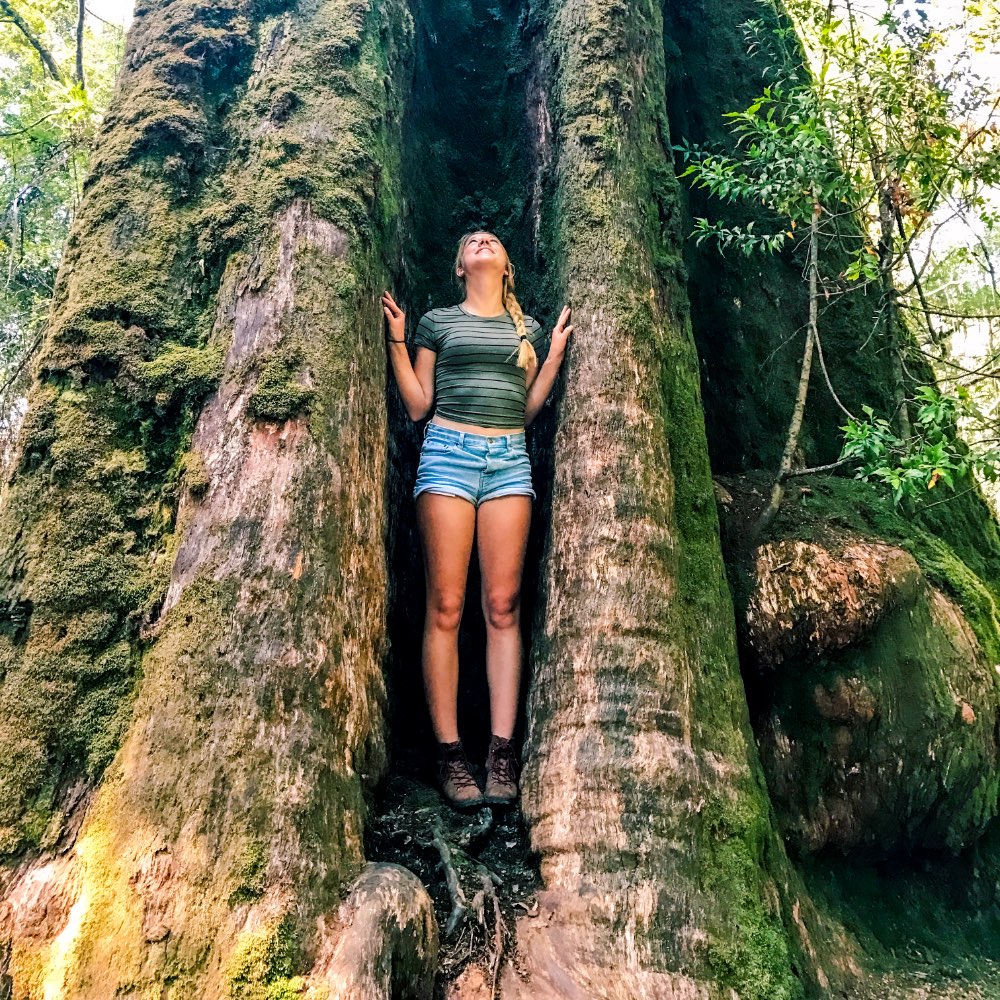


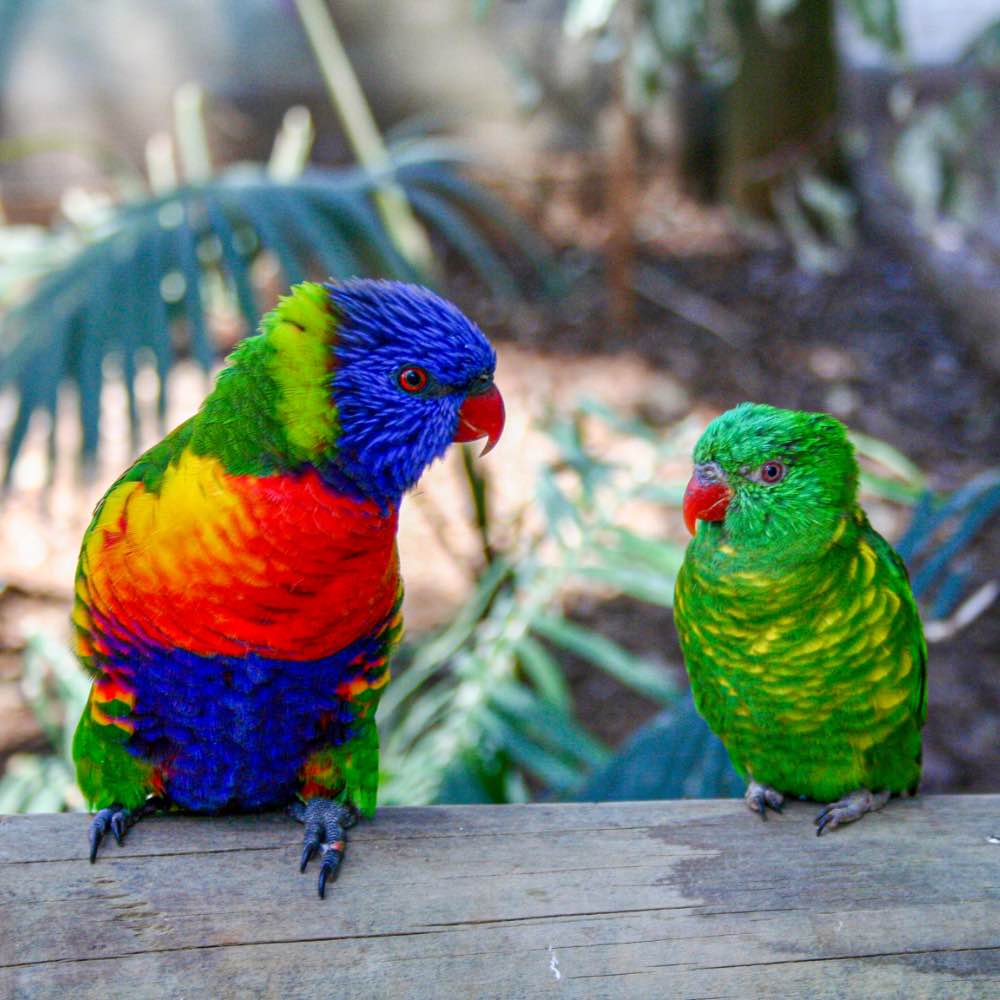



Camp in the quiet and majestic eucalypt forest of the Forest Haven Meditation Center for a two-day workshop in environmental psychology. Ecopsychologist Dr. Eshana Bragg will introduce you to a range of philosophical perspectives on the natural environment, from economic rationalism to deep ecology and ecofeminism and help you explore ways to remain resilient in the face of serious environmental crises. You will begin to develop an understanding of your own and others’ environmental philosophies.
Explore how the land is central to Aboriginal identity in a one-day workshop. Examine different ways Indigenous peoples view and relate to their environments and start to deconstruct dominant western worldviews as you come to understand a radically different worldview. You will be led to critically analyze your own relationship with the environment and to reflect on what contemporary western societies can learn from indigenous cultures that might help them in their efforts to become more sustainable.
In this workshop, led by Dr. Eshana Bragg, you’ll examine models of social change and the types and scales of changes needed to solve our major environmental problems. You’ll look at examples of successful environmental campaigns and be introduced to a wide range of environmental activists. You’ll get practical tools for effective environmental action at different levels: personal, community, and structural/political. As you identify skills you already possess, you’ll explore ideas for projects you can undertake when you return home.
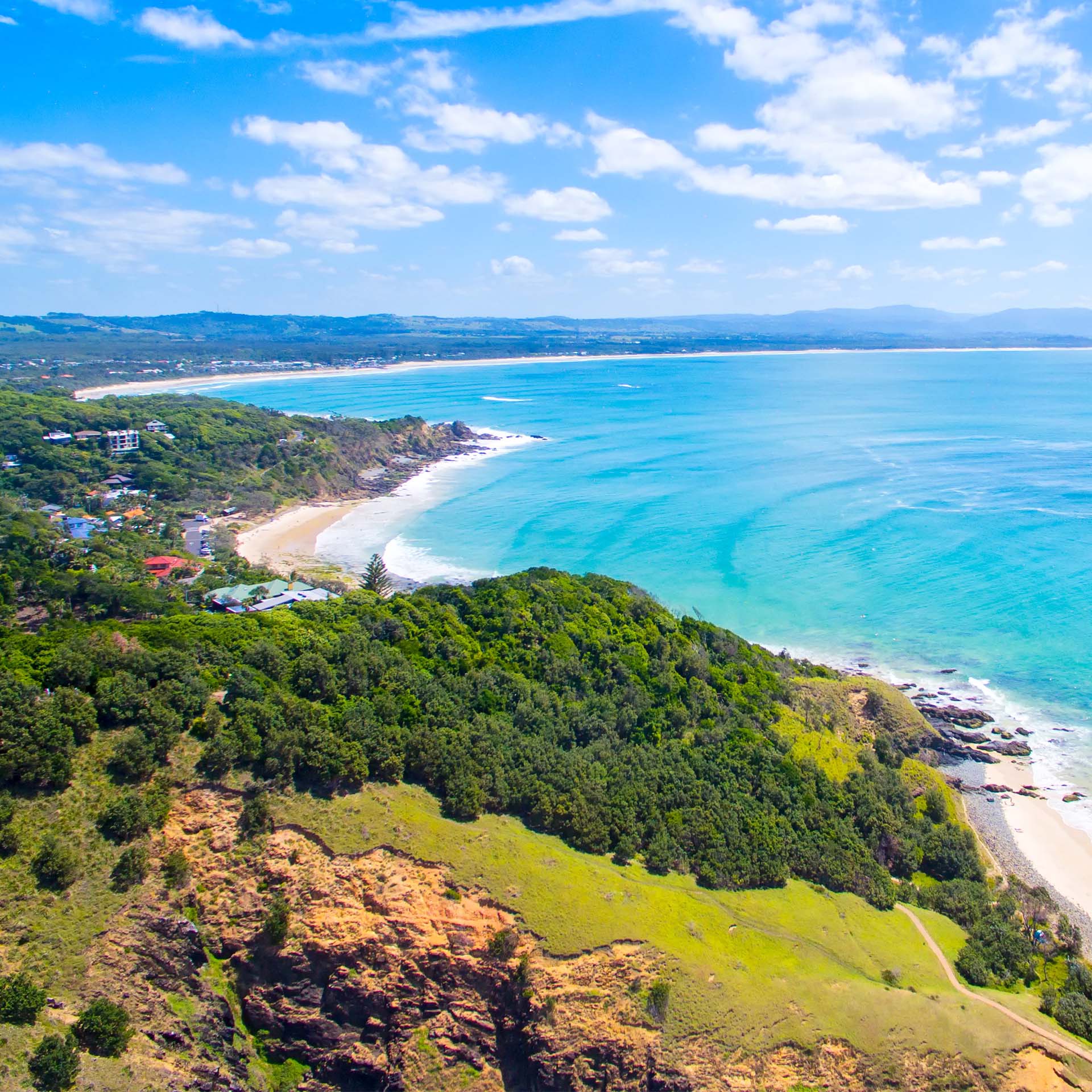
The program’s orientation starts at sustainable Linnaeus Estate, a 280-acre property with 1.5 kilometers of pristine beachfront on Seven Mile Beach, before moving to Byron Bay. On day trips around Byron Bay, you will visit a number of sites important to Australian conservation history and explore temperate and subtropical rainforests, sustainable house design, organic farming, permaculture, community gardens, and renewable energy technologies.
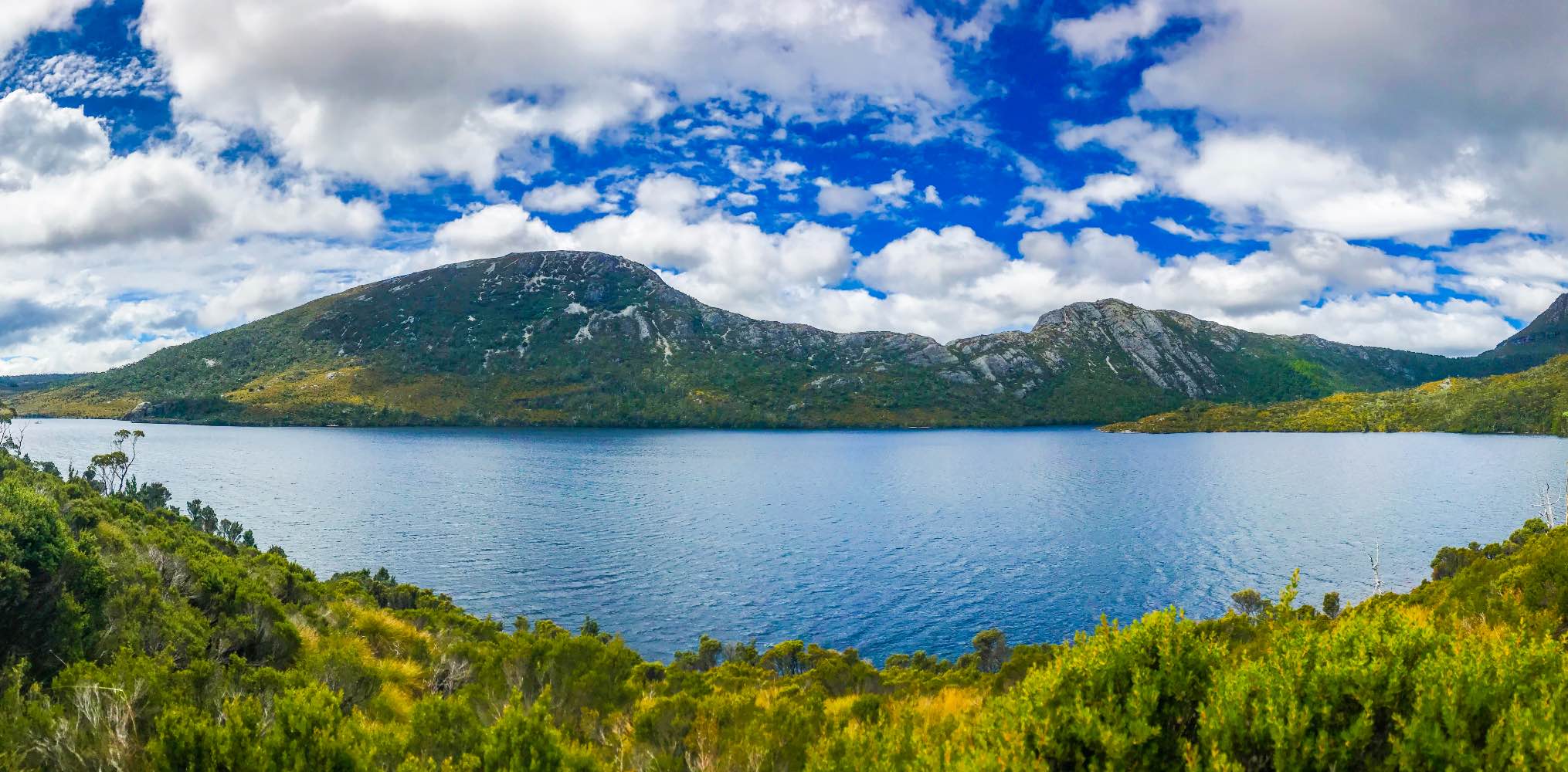
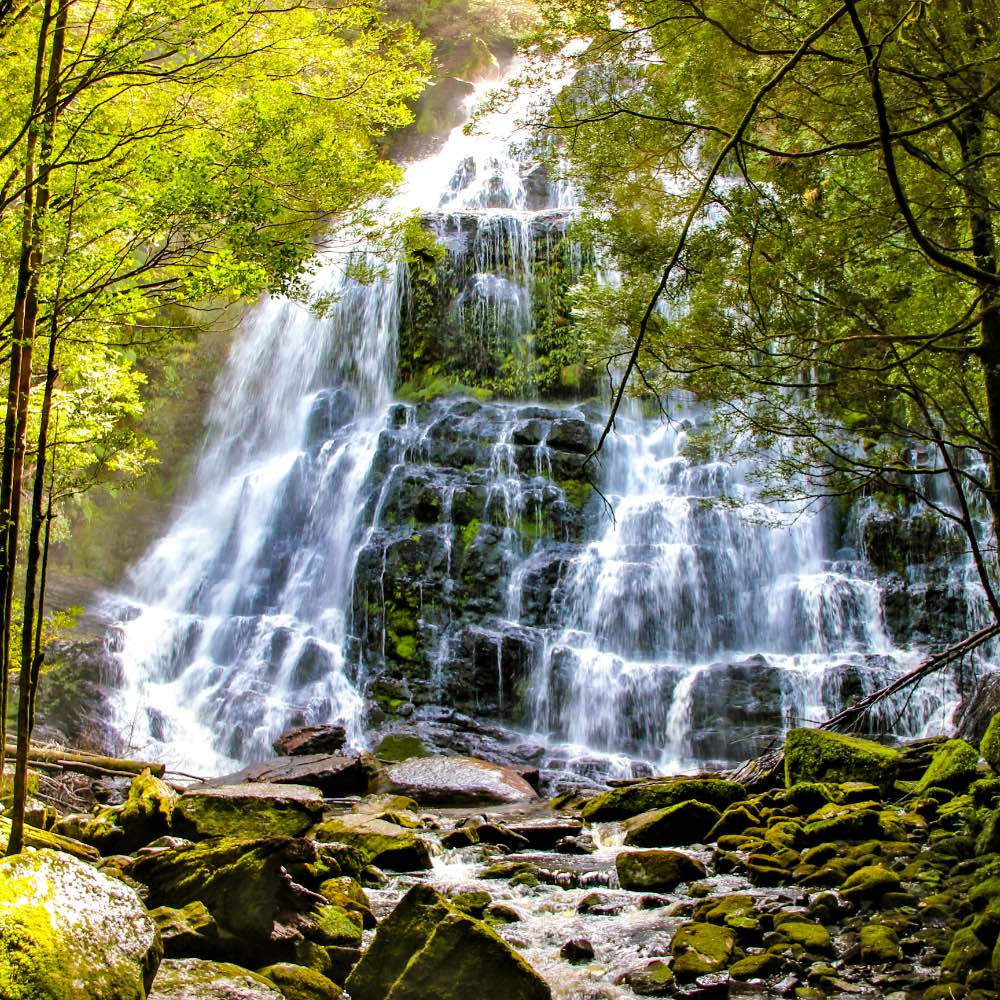
Tasmania’s extremely diverse ecology — including grasslands, eucalypt forests, alpine heathlands, moorlands, and cool temperate rainforests — has resulted in 40 percent of the state being set aside in nature reserves. This includes the 3.5 million-acre Tasmanian Wilderness World Heritage Area, one of only two World Heritage areas to be listed under seven different criteria. The program’s ten-day field trip in Tasmania will take you through spectacular glaciated scenery, magnificent forests with coniferous species of Gondwanan origin and the world’s tallest flowering plants. You’ll also stay in the takayna/Tarkine, a vast wilderness known for its natural values and high concentration of ancient Aboriginal sites.
Tasmania has been the scene of some of the most epic environmental battles in Australia. It is a case study of the corruption of government by corporations and a model for activism combating corruption. In this birthplace of the world’s first green political party, you’ll examine the competition between nature conservation and tourism and the use of the land and resources for wood, minerals, and energy production. You will also meet forest protestors who successfully battled to save old growth forests from logging and visit key sites that illustrate these struggles and sustainable solutions.
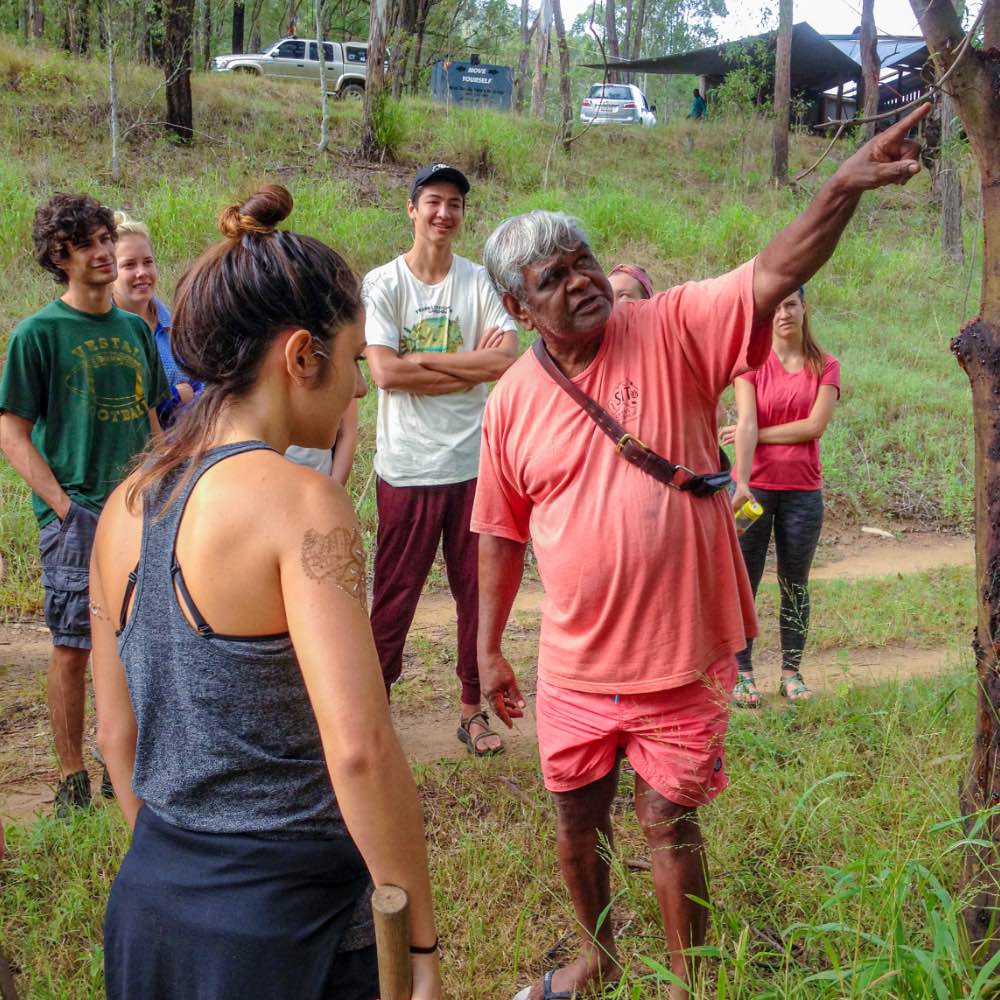
Acquire traditional ecological knowledge on a four-day camping trip led by Aboriginal guides who will enthusiastically share their knowledge of traditional and contemporary Aboriginal cultures. Camping in a beautiful landscape near a river, you will make traditional Aboriginal artifacts, experience Aboriginal customs, and hear ‘Dreamtime’ stories about how to care for and live in the environment.
With more than half of the world’s population living in urban areas, cities are a vital element in the study of sustainability. On the field trip to Sydney and Melbourne, two of the world’s great cities, you will attend stimulating lectures and go on excursions to see examples of sustainability initiatives in urban and semi-urban settings.
Please note that SIT will make every effort to maintain its programs as described. To respond to emergent situations, however, SIT may have to change or cancel programs.
Upon successful completion of the program, students will be able to:
The following syllabi are representative of this program. Because courses develop and change over time to take advantage of dynamic learning opportunities, actual course content will vary from term to term.
The syllabi can be useful for students, faculty, and study abroad offices in assessing credit transfer. Read more about credit transfer.


Sustainability and Environmental Action Seminar – syllabus
(ENVI3000 / 8 credits)
An interdisciplinary course focusing on an analysis of efforts to pursue sustainability in Australia. The course is designed to empower students to make a positive contribution to making societies more sustainable.
Social Science Methods and Ethics – syllabus
(RSCH3500 / 3 credits)
This course is designed to introduce you to the methodological tools deployed by social scientists to conduct empirically grounded, theoretically engaged research. The course will cover the basic elements of research design, the role of theory in empirical research, and the ethics for social scientific research, with particular attention to the complex ethical considerations that arise when conducting research in international and cross-cultural contexts. Students will gain hands-on experience with both basic quantitative and qualitative methods, with the flexibility to emphasize their preferred methodological approach in their final work. Using this project-based approach, the course will prepare you to design and execute social science research projects while developing competency across methodological traditions.
OR
Global Organizational Culture and Ethics – syllabus (GOCE3500/3 credits)
This course equips students to engage meaningfully and ethically in internship experiences across diverse sociopolitical, cultural, environmental, and global contexts. Using a critical, practice-based approach, students examine the nature and purpose of internships as transformative experiential learning opportunities that connect to the program’s Critical Global Issue theme. Emphasis is placed on navigating workplace and organizational cultures, reflecting on identity and positionality in professional settings, and applying ethical principles to working globally with communities, individuals, and environments—particularly in collaboration with vulnerable populations and in sensitive ecological or habitat settings.
In addition to taking the above courses, students will also need to enroll in one of the following two courses:
Independent Study Project
Independent Study Project – syllabus
(ISPR3000 / 5 credits)
These projects are primarily conducted in northern New South Wales or Melbourne, with other locations occasionally approved when appropriate to the project. Students may undertake a traditional research project or, alternatively, produce a creative piece (e.g., art, film, creative writing). All projects must relate to sustainability. A number of students have pursued highly successful creative ISPs, but students must apply for permission to undertake creative ISPs, and this will only be granted if the student can prove that s/he has adequate pre-existing skills. For example, if a student is majoring in the medium (e.g., creative writing), we accept that as evidence of pre-existing skills; otherwise, we ask them to provide proof of his/her skills, such as writing awards, exhibitions of work, and publication of work. For more information, please inquire with the admissions counselor.
For many students the ISP is the highlight of their academic experience in Australia. The ISP allows students to apply the knowledge and skills they have obtained throughout the semester to a sustainability issue. They will work with an assigned advisor to develop a proposal and will spend the last five weeks of the program in the field and writing up their report. Students are encouraged to undertake projects in northern New South Wales or in Melbourne. Very occasionally, permission can be granted to undertake projects in other locations that are appropriate and safe, but permission should not be presumed
Sample ISP topic areas:
Browse this program’s Independent Study Projects / undergraduate research.
OR
Internship and Seminar
Internship and Seminar – syllabus
(ITRN3000 / 5 credits)
This seminar consists of a five-week internship with an environmental nonprofit organization or a government department or agency focused on environmental issues. Permission may be granted to undertake an internship with a for-profit entity, but this will only be given if the entity is primarily focused on environmental outcomes. The aim of the internship is to enable the student to gain valuable work experience in the field of sustainability and to enhance their skills in an international work environment. In consultation with their internship organization and their SIT internship advisor, students will identify a project focus and internship supervisor. Students will complete an internship and submit a paper in which they discuss the overall structure and work of the organization, process their learning experience on the job, and analyze their focus topic. The paper must also document a comprehensive schedule and the specific skills and knowledge acquired through the experience and how the student intends to apply these skills and knowledge upon return to the United States. A focus will be on linking internship learning with the program’s theme of sustainability. Students are encouraged to seek internship projects in northern New South Wales or in Melbourne. Very occasionally permission can be granted to undertake internships in other locations that are appropriate and safe, but permission should not be presumed.
Sample internships:
You will participate in several multi-day interactive workshops.
Ecopsychology Workshop
The quiet and majestic eucalypt forest around the Forest Haven Meditation Center is an ideal venue for the two-day workshop in environmental psychology. You will camp overnight in the forest and wake to a dawn chorus of bird calls. Dr. Eshana Bragg, an ecopsychologist, will explore with you ways to remain resilient in the face of serious environmental crises. She will also familiarize you with a range of philosophical perspectives on the natural environment, from economic rationalism to deep ecology and ecofeminism. This will enable you to begin to pinpoint and develop an understanding of your own individual environmental philosophy and to appreciate the need to understand the environmental philosophies of others.
Aboriginal Worldview Workshop
This one-day workshop explores how the land is central to Aboriginal identity and culture. The workshop will examine differences in the way indigenous peoples view and relate to their environments. By coming to understand a radically different worldview, you will be able to deconstruct dominant western worldviews. You will be led to critically analyze your own relationship with the environment and to reflect on what contemporary western societies can learn from indigenous cultures that might help them in their efforts to become more sustainable.
Social Change and Environmental Action Workshop
This workshop, led by Dr. Eshana Bragg, will present models of social change and examine the type and scale of changes that are needed to solve our major environmental problems. It will present examples of successful environmental campaigns, and you will be introduced to a wide range of environmental activists. The workshop will provide you with practical tools to take effective environmental action at different levels: personal, community, and structural/political. You will explore ideas for projects you can undertake while still an undergraduate, and you will be encouraged to identify and value skills you already possess.


When not traveling on field trips or for your independent project, you will live in shared-room apartments two blocks from the beach in Byron Bay, a town of 9,000 at Australia’s most easterly point. Permaculture education and sustainable farming are popular here, and farmers’ and craft markets are common. The region boasts many artists and musicians and has a strong Aboriginal culture.
When on field trips, you will stay in hostels, lodges, cabins, and campsites. Due to limited space and availability, accommodations throughout the semester do not allow for private (single occupancy) rooms for students.
Currently there are no homestays, but SIT staff can offer guidance on homestay opportunities during the Independent Project period of the semester for those interested (please note homestays are not guaranteed). There are also three short camping trips during the program in beautiful locations.

Students on this program represent diverse colleges, universities, and majors. Many of them have gone on to do important work that connects back to their experience abroad with SIT. Recent positions held by alumni of this program include:
Founder of Miracle One organic winery, Sonoma, CA
Freelance environmental journalist and faculty member at University of North Carolina, Chapel Hill, NC
Marketing specialist at Stem Inc., Millbrae, CA
Campaign organizer for Environment America, Washington, DC
Environmental outreach coordinator, Minnesota Department of Agriculture


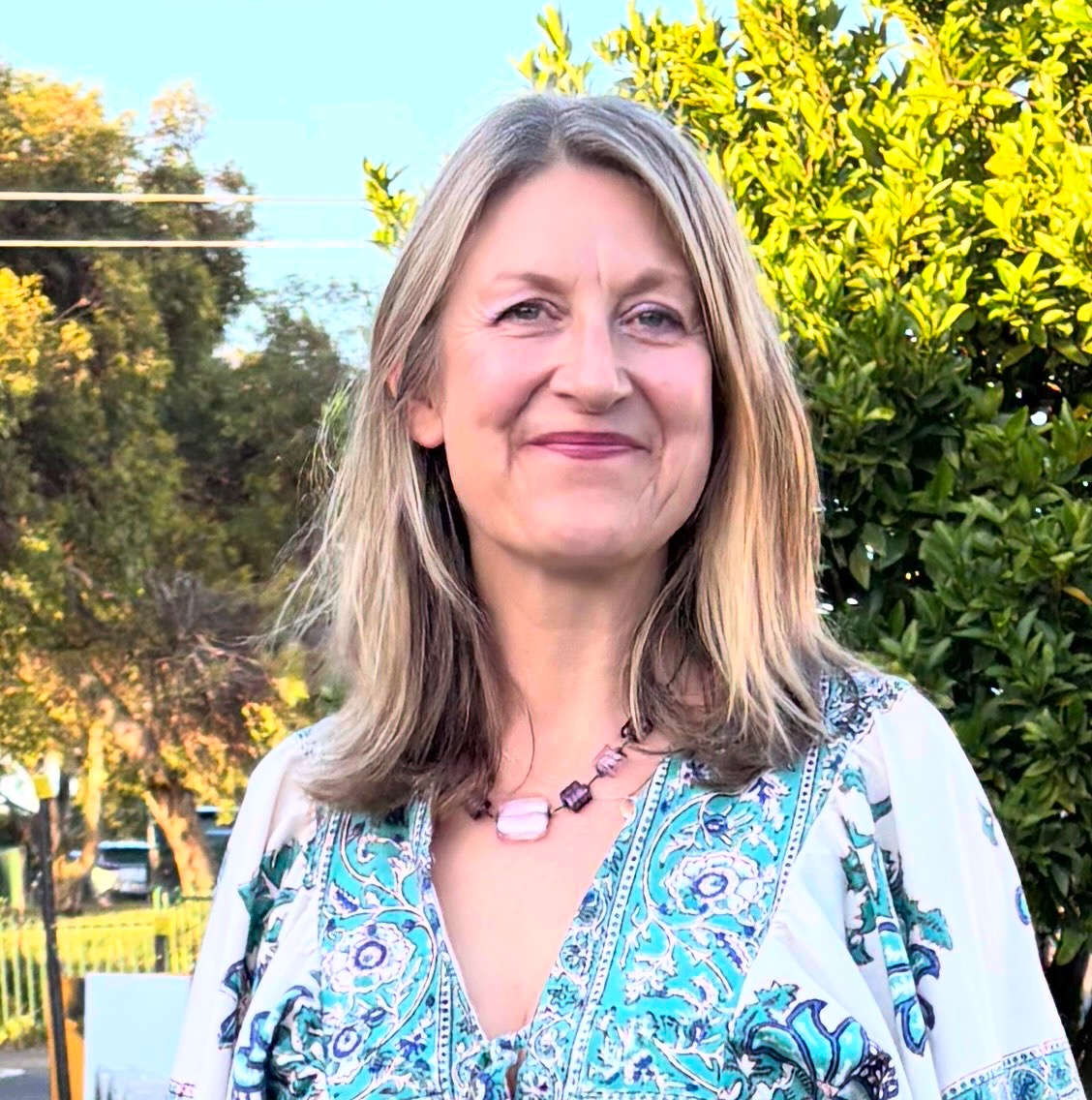


SIT Study Abroad is committed to ensuring that international education is within reach for all students. We believe in the transformative power of immersive, intercultural experiences and are dedicated to supporting students in their educational journey.
See All Costs
A critical step in preparing for your study abroad program is planning how you will maintain your health and wellbeing. Please review the following information carefully and contact [email protected] with any questions or concerns.
Learn More
Students are required to obtain a visa for this program. Your admissions officer will provide you further guidance on the process and support documents. Please do not apply without instructions from your admissions officer.